Venus Drishti in Vedic Astrology: The Hidden Influence of Love, Attraction, Beauty & Relationship Karma
In Vedic astrology, Venus (Shukra) is considered one of the most influential planets when it comes to love, attraction, emotional bonding, beauty, pleasure, romance, luxury, creativity, and relationship experiences. While many people associate Venus only with romance, astrologers view this planet as much deeper than simple attraction.
Venus represents the way people experience emotional pleasure, attachment, relationships, artistic appreciation, and personal desires. It influences how individuals connect emotionally, what they find attractive, how they express affection, and even how they seek emotional comfort in life.
However, the influence of Venus does not remain limited to the house where it is placed. Through its drishti, or planetary aspect, Venus also projects emotional and psychological energy toward other houses, influencing relationships, emotional expectations, self-worth, financial desires, and social interaction.
Understanding Venus drishti is important because many emotional struggles, romantic attractions, and relationship patterns become clearer through Venus influence in the birth chart.
What Venus Represents in Vedic Astrology
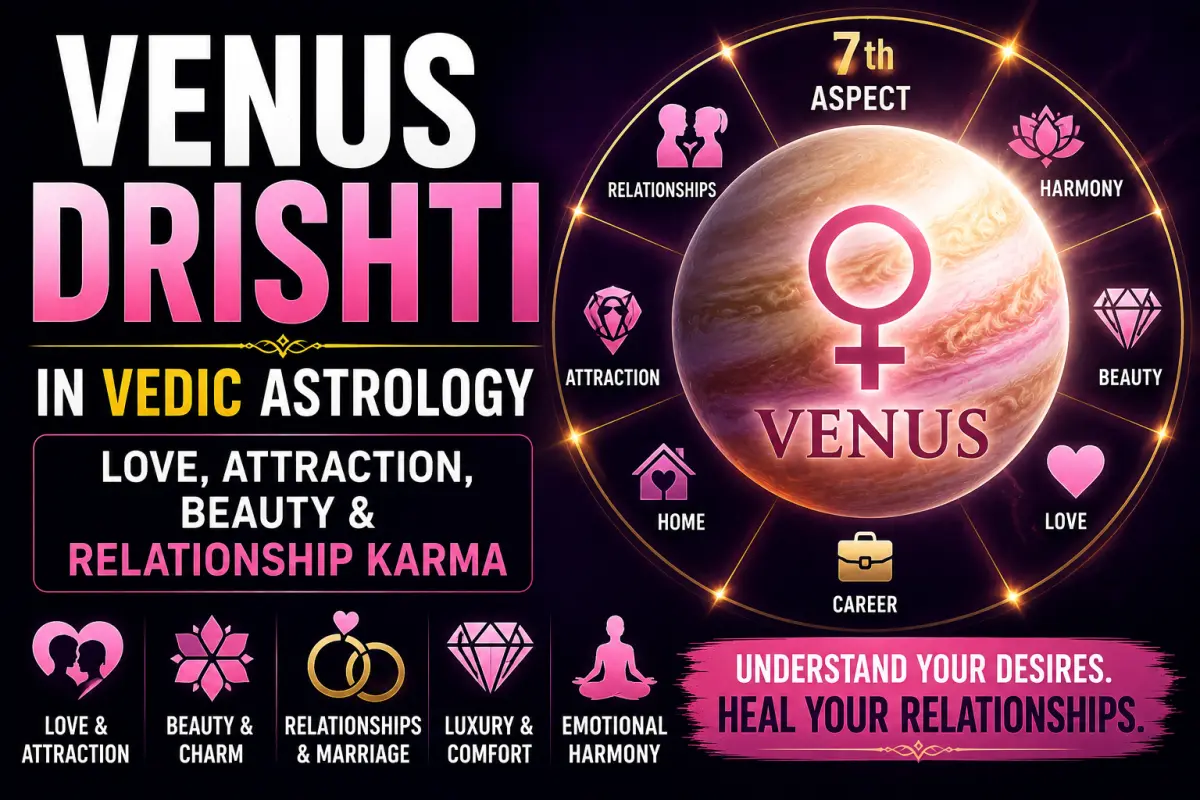
Venus is associated with emotional harmony, affection, romance, attraction, beauty, artistic sensitivity, luxury, comfort, pleasure, and relationship experiences. In traditional astrology, Venus is also connected with marriage, emotional satisfaction, sensuality, and material enjoyment.
A strong Venus often creates individuals who naturally appreciate beauty, emotional connection, elegance, creativity, and harmony in relationships. Such people usually value emotional closeness and may possess strong artistic or aesthetic sensitivity.
You May Also Like
On the other hand, an afflicted or imbalanced Venus may create emotional confusion, attachment issues, relationship instability, unrealistic romantic expectations, or dependence on external validation.
Because Venus governs emotional desire, its influence becomes extremely important in understanding modern relationship psychology.
How Venus Drishti Works
Like other planets in Vedic astrology, Venus aspects the 7th house from its placement. This means Venus projects emotional, romantic, and psychological energy toward the opposite house.
The house receiving Venus drishti often becomes connected with emotional desire, attraction, comfort, harmony, or attachment.
For example, if Venus aspects the 10th house, the individual may seek emotional fulfillment through career recognition or social admiration. If Venus aspects the 7th house, relationships and emotional bonding may become central life themes.
Venus drishti reveals where individuals strongly seek emotional satisfaction, beauty, validation, intimacy, or emotional comfort.
The Psychological Meaning of Venus Influence
Psychologically, Venus represents the emotional side of human desire. It influences not only whom people love, but also why they feel emotionally attracted to certain personalities, lifestyles, environments, and emotional experiences.
Venus energy affects emotional preferences such as:
• The need for affection and appreciation
• Attraction toward beauty and elegance
• Desire for emotional closeness
• Emotional dependency patterns
• Romantic fantasies and expectations
• Need for harmony and validation
This is why Venus influence often explains why some people repeatedly attract emotionally intense relationships, become emotionally attached very quickly, or struggle balancing emotional desire with emotional stability.
Venus Aspect on the 1st House
When Venus aspects the 1st house, personality becomes more attractive, emotionally expressive, charming, and socially magnetic. These individuals often possess natural charisma and may care deeply about appearance, social harmony, and emotional connection.
This aspect can increase artistic sensitivity, romantic nature, and desire for emotional appreciation. People with this influence are often emotionally warm and capable of creating strong emotional bonds.
However, emotional insecurity may also develop if self-worth becomes too dependent on external admiration or relationship validation.
Venus Aspect on the 4th House
The 4th house governs emotional security, inner peace, home environment, and emotional comfort. Venus drishti here creates a strong desire for emotional harmony and peaceful surroundings.
These individuals usually prefer emotionally calm environments and may feel deeply affected by emotional conflict inside the family or home.
This aspect often creates love for beauty in living spaces, emotional attachment to comfort, and a desire for emotionally supportive relationships.
However, excessive emotional dependence on comfort and attachment can sometimes reduce emotional resilience.
Venus Aspect on the 7th House
The 7th house is naturally connected with relationships, marriage, partnerships, attraction, and emotional compatibility. Venus drishti on this house strongly amplifies romantic energy.
People with this influence often prioritize emotional bonding and companionship in life. Relationships become emotionally significant and deeply connected with personal happiness.
This aspect may create strong attraction toward emotionally expressive or aesthetically attractive partners. It also increases the desire for emotional validation, loyalty, affection, and romantic harmony.
However, emotional idealization may sometimes create disappointment if relationships fail to match emotional expectations.
Venus Aspect on the 10th House
When Venus aspects the 10th house, emotional satisfaction becomes connected with career, social image, recognition, or public admiration.
Such individuals may naturally perform well in professions related to creativity, beauty, media, entertainment, communication, fashion, luxury industries, or public interaction.
This aspect often creates a desire to be appreciated socially and emotionally through professional success.
However, emotional dependence on external recognition may create inner dissatisfaction if career success becomes unstable.
Strong Venus vs Weak Venus Influence
| Strong Venus | Weak Venus |
|---|---|
| Healthy emotional connection | Emotional instability |
| Balanced attraction | Toxic attachment |
| Creativity and charm | Need for validation |
| Emotional harmony | Relationship confusion |
| Healthy self-worth | Dependency on others |
Why Venus Creates Emotional Attachment
Venus naturally seeks emotional pleasure and connection. Because of this, strong Venus influence often increases emotional attachment toward relationships, admiration, comfort, beauty, or validation.
When emotionally balanced, Venus creates love, affection, emotional warmth, and harmony. But when emotionally imbalanced, it may create:
• Fear of loneliness
• Romantic obsession
• Emotional dependency
• Validation-seeking behavior
• Difficulty letting go emotionally
More Astrology Articles
This is why Venus influence becomes extremely important in understanding modern emotional struggles and relationship psychology.
Venus and Relationship Karma
In Vedic astrology, Venus also reflects relationship karma. It often reveals how individuals experience emotional lessons through attraction, attachment, romance, disappointment, loyalty, and emotional growth.
Some people repeatedly attract emotionally intense relationships because Venus combines with Rahu, Ketu, Saturn, or Mars in psychologically powerful ways.
For example, Rahu-Venus combinations may create obsessive attraction, while Saturn-Venus combinations may create delayed relationships, emotional maturity lessons, or fear of emotional vulnerability.
This is why astrology views relationships not only as emotional experiences but also as opportunities for psychological and spiritual growth.
Venus and Modern Social Media Culture
In modern society, Venus energy has become strongly connected with social media validation, appearance culture, emotional attention, and digital attraction.
Many people unconsciously seek emotional approval through:
• Likes and attention
• Physical appearance validation
• Relationship status
• Luxury display
• External admiration
Astrology teaches that emotionally healthy Venus energy comes from self-worth and emotional balance rather than constant external approval.
Astrological Guidance for Healthy Venus Energy
One of the most important lessons of Venus is emotional balance. Attraction and emotional connection are natural parts of life, but emotional peace should not become entirely dependent on external relationships or validation.
Healthy Venus energy develops when individuals maintain emotional maturity, self-respect, emotional boundaries, and balanced attachment.
Emotional guidance associated with Venus includes:
• Avoid emotional dependency
• Develop self-worth internally
• Balance love with emotional wisdom
• Do not idealize people unrealistically
• Maintain emotional boundaries
• Value emotional honesty over superficial attraction
Traditional Remedies for Venus Strengthening
Vedic astrology recommends strengthening Venus through emotional balance, kindness, creativity, beauty, and respectful relationship behavior.
Traditional remedies include:
• Chant “Om Shukraya Namah”
• Maintain emotional cleanliness and honesty
• Respect relationships and commitments
• Practice gratitude and kindness
• Avoid manipulative emotional behavior
• Spend time with artistic or calming activities
Conclusion
Venus drishti in Vedic astrology reveals how emotional desire, attraction, beauty, relationships, comfort, and emotional attachment influence different areas of life.
A strong Venus creates emotional warmth, charm, creativity, harmony, and healthy emotional connection, while an imbalanced Venus may create emotional dependency, unrealistic expectations, or relationship confusion.
Understanding Venus influence helps individuals recognize their emotional patterns, attraction psychology, and relationship karma more clearly.
Sometimes true emotional beauty is not found in external attraction—but in emotional maturity, balance, and inner peace.